

Setting Isn’t Just Scenery—It’s Strategy
Crafting immersive worlds that do more than decorate.


Setting is more than simply “Where” and “When”
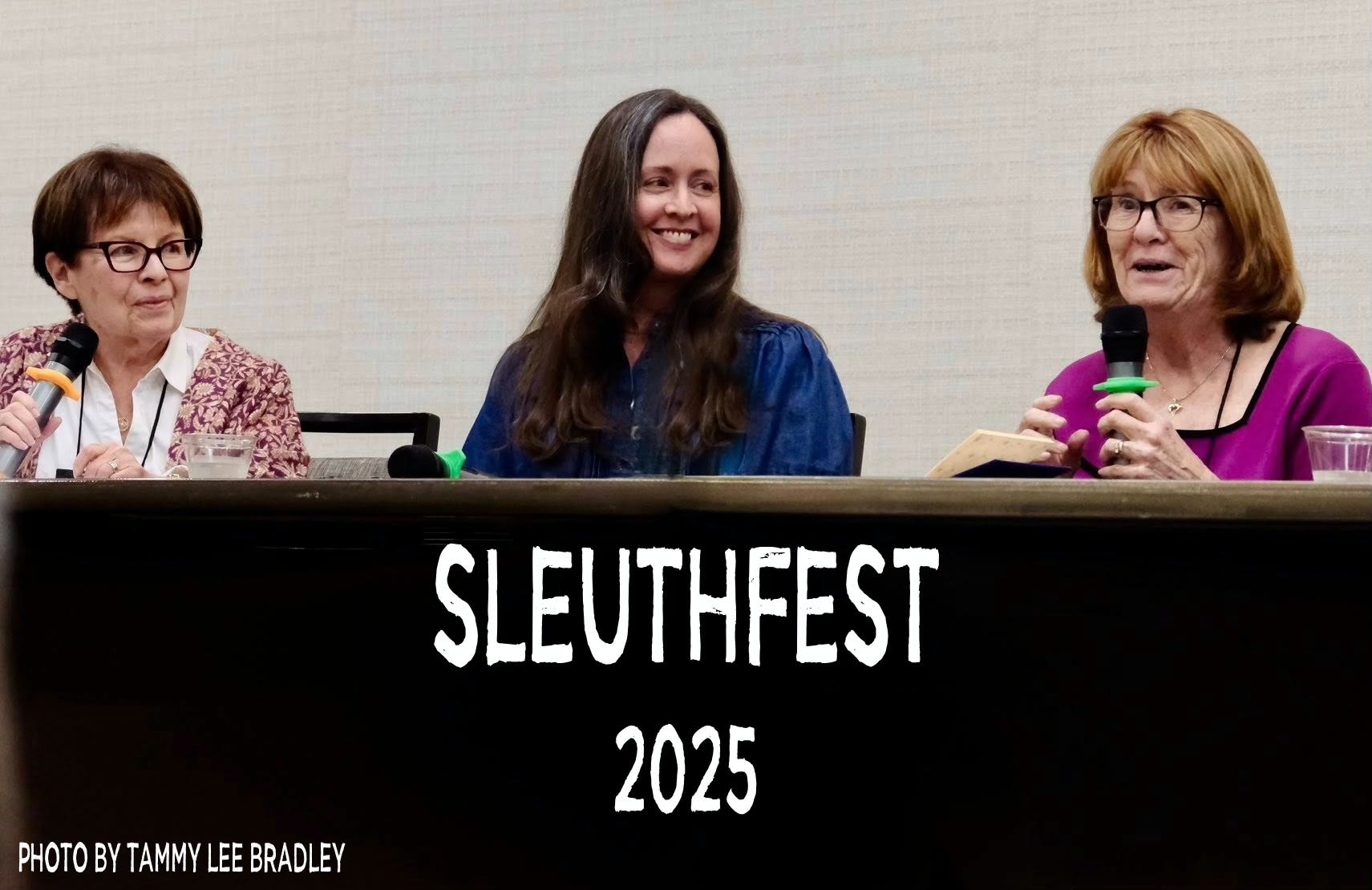
A few months ago, I participated in SleuthFest, a conference for mystery, thriller, and suspense writers and fans. The event was organized by the Florida chapter of the Mystery Writers of America, and I was fortunate to be seated on a panel titled “Location, Location, Location,” where we discussed the vital importance of setting in storytelling.
When we talk about setting, we are referring to more than the specific place (whether it’s a real city or a fictional town) and the specific time (be it modern day, a prior century, or five hundred years in the future). Setting includes all those tangible and intangible aspects that give place and time meaning, structure, texture, and color. It obviously encompasses physical elements—buildings, streets, and geographic features like rivers and mountains—but it also includes the sounds, scents, and atmosphere of a location. Is there music playing? If so, what type and how loud? Is food cooking or are flowers blooming nearby? Perhaps there’s an odor of something decaying. What is the weather like this time of year? Is it hot and humid? Has a blizzard caused whiteout conditions? Is air-conditioning available? Has the heating gone out? Is the environment wild and untamed, or is it artificially controlled?
In addition to adding depth and richness by grounding the reader in a time and place, setting has an enormous impact on the characters. It affects their mood, their choices, and the pressures bearing down on them. For example, if someone is being eaten alive by mosquitoes, they’re unlikely to be smiling and happy, unlikely to want to be lazy and inactive, unlikely to feel like everything is going well. Instead, they’re more apt to be cranky, impatient, and ruing the day they ever stepped foot in that particular place.
My fellow SleuthFest panelists and I chatted about how we get creative with setting—writing to readers’ senses and creating a vivid backdrop for the characters and plot. We discussed the advantages and pitfalls of using real-world locations, as well as creating fictional locales. We also shared some of our favorite settings—both real and imagined—from books that we’ve read.
Many writers say they begin story development with either the characters or the plot—the “Who” and “What” questions—filing in the “How,” “Why,” and “Where” later. For me, “Where” is becoming more and more critical to my writing process. With the Old City Mystery series, the setting of St. Augustine, Florida played a crucial role in the development of each story. Not only did it limit where my characters could go and what is was possible for them to do, but it impacted their physical and emotional well-being. I had to take into account the severity of the summer heat and humidity, their choice of clothing, the presence or absence of air-conditioning, the feel of the breeze off the bay, and the smell of soil, spilled beer, and sweaty bodies baking in the sun.
Setting can be a writer’s best friend and secret weapon. It adds tension, sways emotions, and brings stories to life. Writers, don’t be afraid to lean into setting when crafting your stories. And readers, pay particular attention to the setting in the next book you pick up. Was it used well—or was it an opportunity missed?
Over on my podcast . . .
During the past few months, I had some great guest authors visit with me on The Bookshop at the End of the Internet podcast. Check them out!
Episode #244 Author Cynthia Moore discusses her new book, Dancing on Coals: A Memoir of an Overperformer, which tells the story of her life thus far in two parts. The first is a twenty-year journey in experimental theater. She spent those 20 years traveling, performing, creating her own theatrical pieces, and literally throwing herself against walls. The second part of her story is her pivot to obtain her master’s degree in clinical psychology and spend the next twenty years working as a mental health counselor. Cynthia went from living a performative and physically expressive life to one of calm, introspective reflection. She discusses her writing journey, what lead her to pivot from performing to counseling, and the meaning behind her title, Dancing on Coals.
Episode #243 Author Zaq Baker discusses his debut novel, Unspectacular. This family dramedy is about young people trying to balance a music career with family struggles and everyday life. The story is told in two primary narratives: Mae, a twenty-year-old music student who doesn’t really want a career in music but who is expected to be next big thing; and Ajay, a software engineer and skilled drummer who struggles to balance the job at which he is expected to excel with the music career he desperately wants. Zaq Baker has written what he knows. He’s been singing and writing songs since he was fifteen. A professional musician and songwriter, Zaq plays in about ten different bands, so writing Unspectacular began as a private, creative project just for himself.
Episode #242 Author Mima Tipper discusses her debut young adult contemporary romance novel, Kat’s Greek Summer. Rising high school freshman, Kat, is dragged off to Greece for a vacation to meet her extended family, ruining Kat’s own summer plans of training for the cross-country team and preparing for a successful transition into high school. Mima describes Kat’s Greek Summer as high-stakes odyssey for her main character—one of pursing dreams, discovering love, owning her heritage, and finding her own voice. For this story, Mima drew upon her own memories of the summer following her eighth-grade year, as well as summers she spent in Greece with her extended family.
Episode #241 Author Richie Billing discusses his new fantasy novella, Together We Rise, a story about revolution against a corrupt government in a world were life has become a fight for survival. Richie took inspiration from real-world events and the plight of many around the globe. This story is told from multiple points of view—workers, healers, children, police officers, criminals, and so on. Each chapter follows a different character, and the story unfolds like a baton relay race, with each character handing off to the next, chapter by chapter, until we see the entire story unfold. Richie also used AI to create a soundtrack to accompany this novella.
Episode #240 Author Liz Alterman discusses her new book, Claire Casey’s Had Enough. Claire Casey is a forty-something year old mom of three who is recently separated from her husband and is facing the decision of whether to reconcile or file for divorce. The book follows Claire through one thirteen-hour day in which her life feels like its spinning out of control. When an old flame gets in touch and asks Claire out on a date, she is forced to revisit her hopes and dreams and things that took a back seat to marriage and family, all while trying to deal with the everyday chaos of being a suburban mom. As it all gets to be too much, Claire has to be honest with herself, take a hard look at her life, and decide what she really wants.
Episode #239 Author Sara Winokur discusses her two new novels—Double Blind: The Icelandic Manuscript Murders, and Ivory Bones: The Lewis Chessmen Murders—both set in Iceland and featuring a forensic geneticist who uses her knowledge and skills to solve mysteries. In both novels, Sara blends Nordic noir mysteries with history and real-world intrigue. Sara was a genetics researcher for twenty-five years, and she manages to include genetics into her stories in a light-handed way. She also likes to weave in historical events and mysteries. As a result, Double Blind features mysterious medieval manuscripts of Icelandic sagas, while Ivory Bones includes a famous set of ivory chess pieces known as the Lewis Chessmen.

One more thing . . .
A Place for Good and Evil and City of Innocent Monsters have won more awards!


My first adult mystery novel, A Place for Good and Evil, was the winner of the Mystery category in the 2025 Next Generation Indie Book Awards! It also won a silver medal in the 2025 Florida Authors and Publishers President’s Book Awards.
In addition, both A Place for Good and Evil and City of Innocent Monsters have been named finalists for the 2025 Silver Falchion Award, awarded by the Killer Nashville International Writers Conference to the best books of the previous year in the mystery, thriller, suspense, and crime genres.
I’m thrilled by the momentum this series has gained and proud to see it resonating with readers and judges alike. Shifting to adult mysteries was the right move—and I’m channeling that excitement straight into more stories.
Congratulations on your wins! I visited St. Augustine for the first recently and loved it!